

by: Anas Khan
-
September 9, 2026
-
Comment (1)
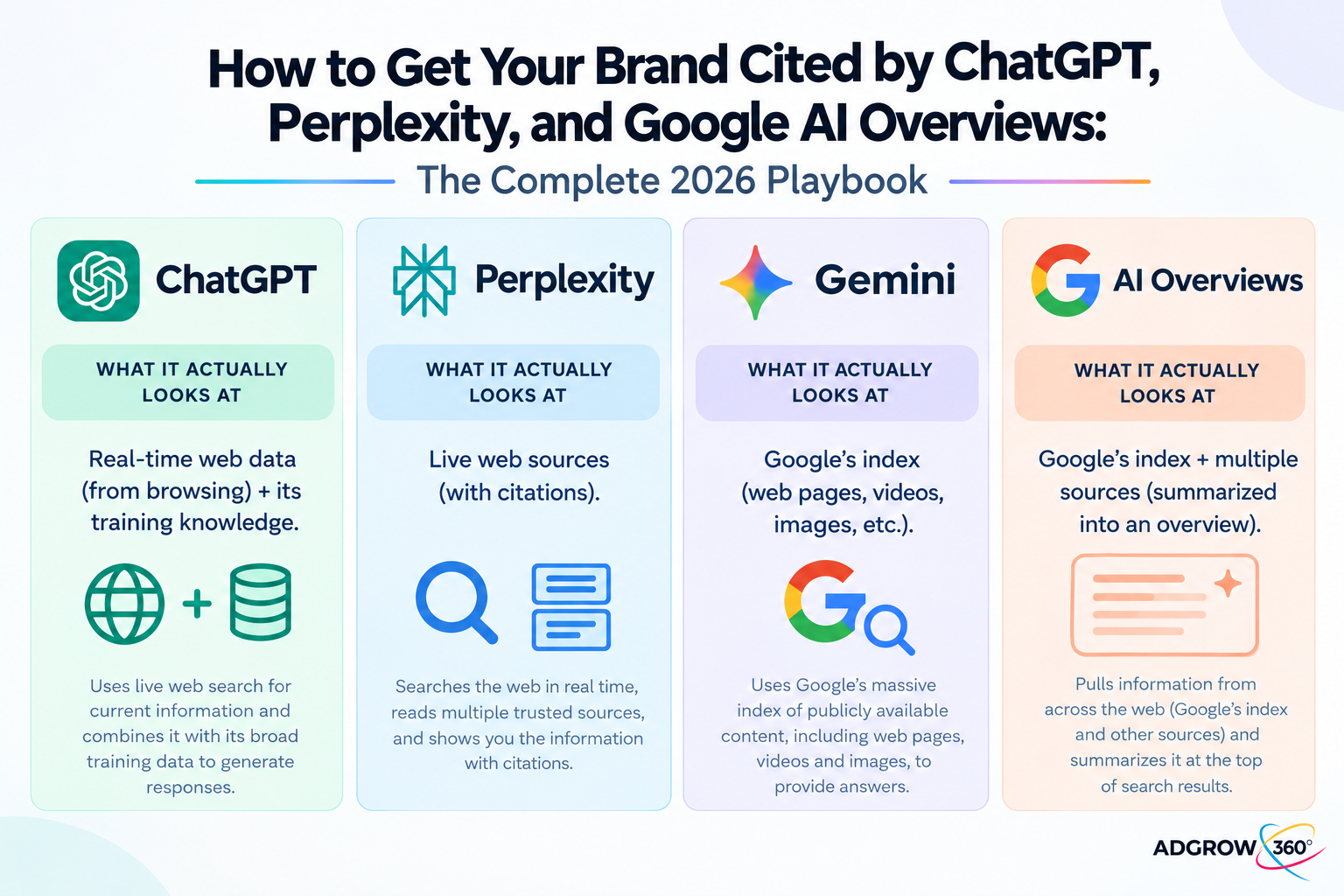
Quick answer: Getting cited isn’t about writing better content, it’s about writing content a model can lift. Answer the exact question in the first sentence, attach a real number to every claim, make sure the right crawler can actually reach the page, and say the same thing about your brand everywhere it appears online. The rest of this playbook is the mechanics behind that one paragraph, how to get your brand cited by ChatGPT, Perplexity, Gemini, and Google AI Overviews actually pull their answers from — because it’s not the same place, and most guides treat it like it is.
Why "ranking" stopped being the whole game
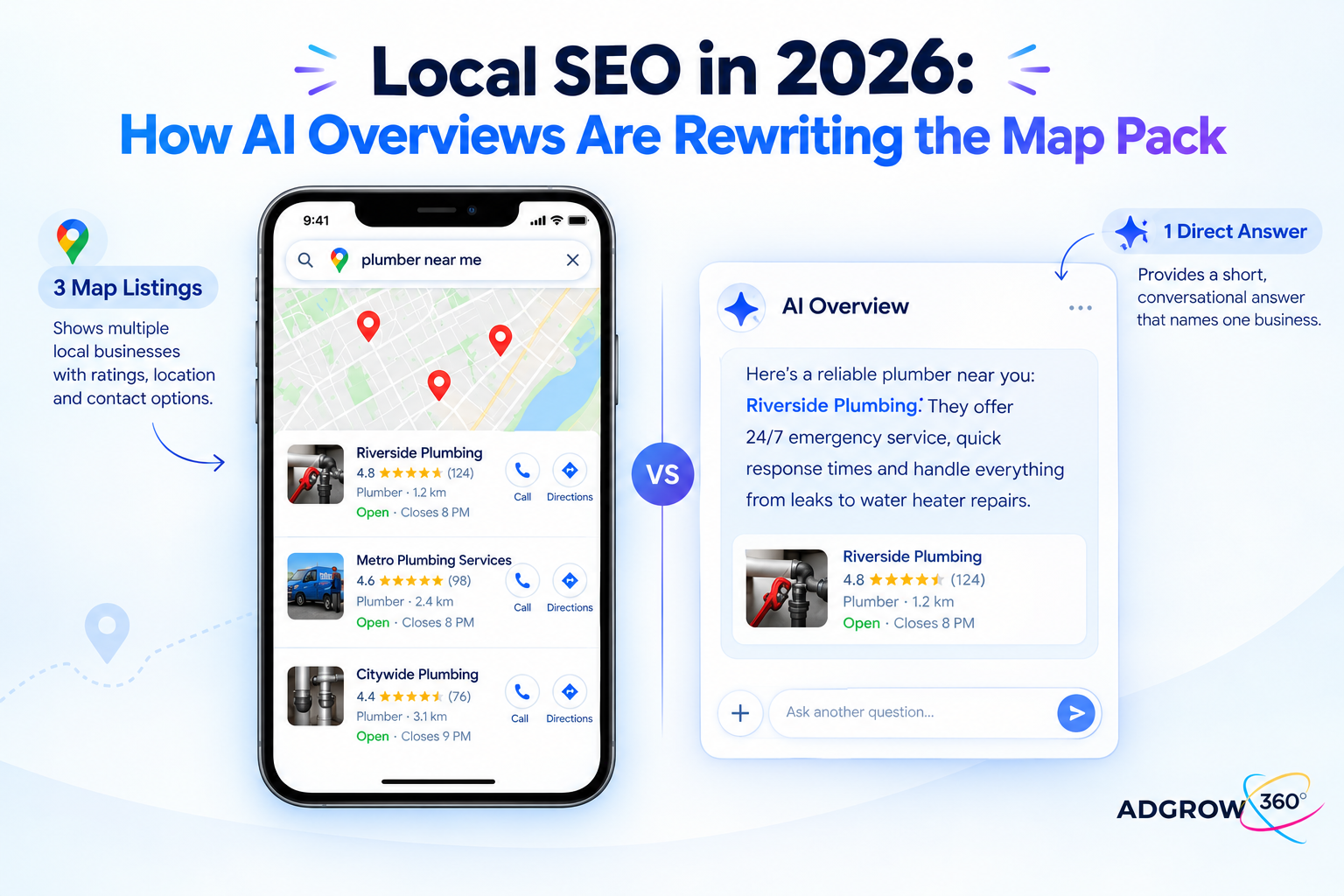
For twenty years, SEO had one scoreboard: position on the page. That scoreboard still matters, but it’s no longer the only one being kept. Ahrefs analyzed 300,000 keywords and found that when an AI Overview appears above the results, the top-ranking page’s clickthrough rate drops by roughly a third. You can hold position one and still watch the visit disappear, because the answer already left the building before anyone scrolled down to your listing.
Here’s the part worth sitting with, though: that traffic isn’t gone, it’s rerouted. Someone still asked the question. An engine still answered it. Somewhere in that answer, a small number of brands got named as the source. The work now is making sure one of those names is yours — which is a different skill than ranking, even though the two feed each other.
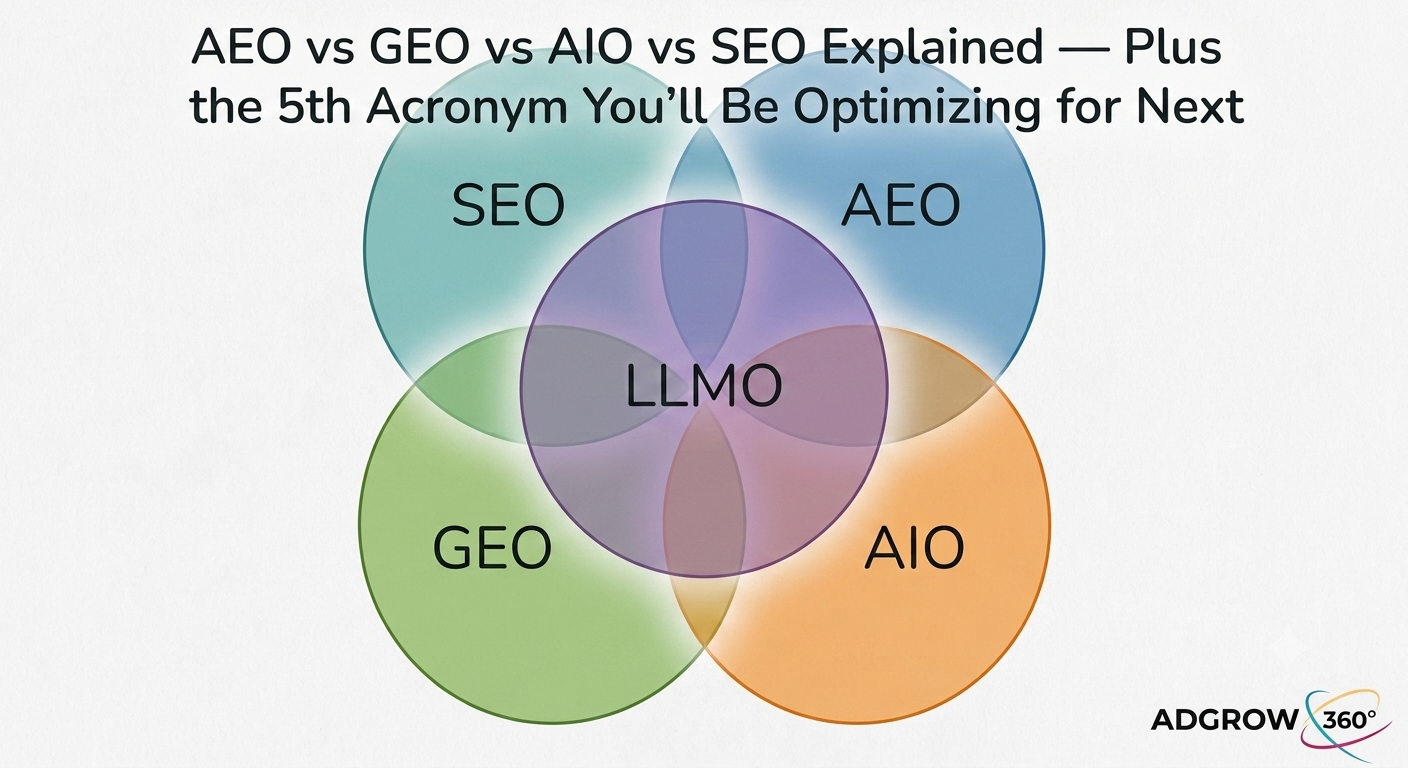
That skill has a name, or rather two names that mean roughly the same thing depending on who you ask: AEO (Answer Engine Optimization) and GEO (Generative Engine Optimization) — the difference between these two and their cousins AIO and LLMO is worth untangling on its own, but the short version is enough to work from here. Neither replaces SEO. Both assume a healthy, well-indexed, technically sound site as the floor, then add a layer on top of it: structuring content so a model can pull a clean, accurate claim out of it and attach your name to that claim.
How ChatGPT, Perplexity, Gemini, and AI Overviews actually decide who to cite
This is the part most guides get wrong by flattening it. “Optimize for AI search” isn’t one instruction, because these four systems don’t source their answers the same way. Treat them as one blob and you’ll spend effort on the wrong lever for the wrong engine.
| Engine | Where it actually looks | The bot to check for | What it specifically rewards |
|---|---|---|---|
| ChatGPT | Training memory and live web search grounded primarily in Bing | GPTBot, OAI-SearchBot, ChatGPT-User | Bing indexation, plus a page a model can quote cleanly once it’s retrieved |
| Perplexity | Its own crawler and its own index, rebuilt more or less continuously | PerplexityBot | Dense, source-rich pages; community discussion carries unusual weight here |
| Gemini | Real-time Google Search “grounding” — technically retrieval-augmented generation | Google-Extended (robots.txt) | Individual sections, not whole pages — Gemini can cite a single well-built block |
| Google AI Overviews | Google’s own search index, the same one behind classic rankings | Standard Googlebot | Pages that already have strong topical and technical SEO signals |
Two of these deserve more unpacking, because the nuance is where the actual opportunity lives.
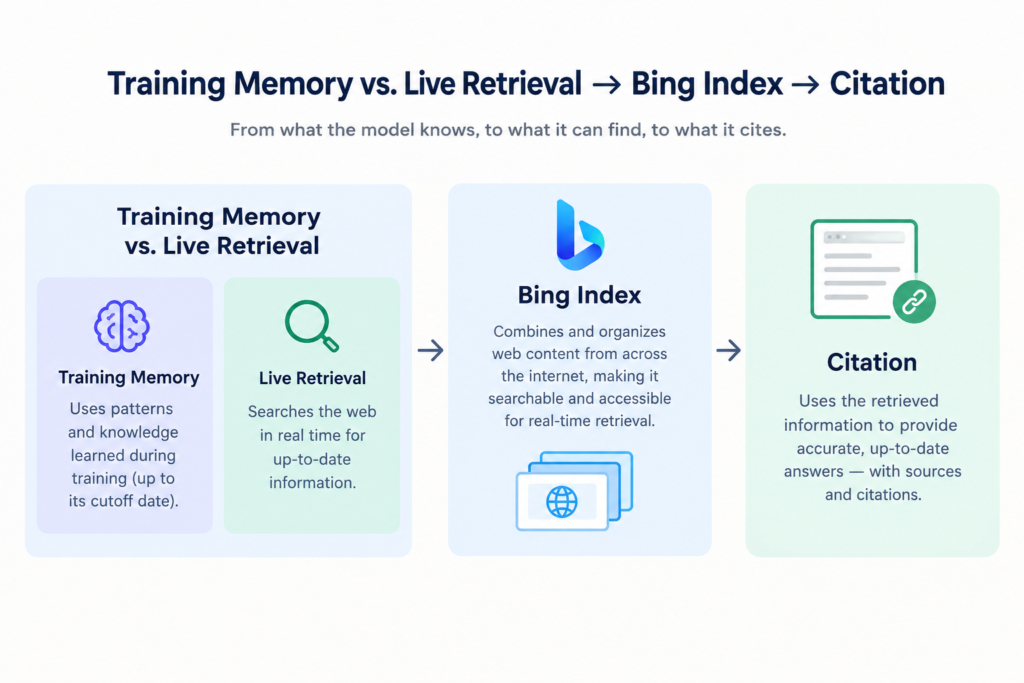
ChatGPT runs on two separate systems, and mixing them up is why most “just optimize for AI” advice is vague. One is what the model learned during training — the brands it names unprompted, with no citation attached, because it isn’t searching, it’s recalling. You influence that slowly, over months, by having a consistent story about your brand repeated across the web. The other is live retrieval: when ChatGPT decides a question needs current information, it searches, and that search is grounded in Bing. One industry study tracking citations from ChatGPT’s search feature found 87% of them matched Bing’s own top results — which is exactly why Bing Webmaster Tools, not just Google Search Console, belongs in your toolkit now.
But don’t take that correlation further than it goes. A separate analysis of nearly 20,000 queries across eight verticals found that a page sitting in Bing’s top three matched the page ChatGPT actually cited only 7% or so of the time. Ranking in Bing gets you into the room. It doesn’t decide who the model quotes once it’s there — the content still has to earn it. The same research found barely any overlap in which URLs got cited across different engines for the same question, which is the single biggest reason “write one AI-optimized page and you’re covered” is bad advice. You’re optimizing for four separate rooms, not one.
Gemini’s mechanism is the one competitors covering this topic almost always skip, and it changes how you should structure a page. Google’s own documentation describes Gemini’s grounding as connecting the model to real-time web results and returning citations tied to specific spans of text — in practice, retrieval-augmented generation. The practical consequence: Gemini doesn’t need your whole article to be good. It can cite one clean H2 block on an otherwise mediocre page, and it can just as easily skip your best paragraph if it’s buried inside a weaker one. That’s a genuinely different design constraint than “make the page good” — it’s “make every individual section defensible on its own.”
Google AI Overviews and Gemini get conflated constantly, and they’re not the same thing. AI Overviews is the summary box inside classic Google Search, drawing on Google’s existing index — if your SEO is solid, you’re already partway there. Worth checking directly rather than assuming: Google added AI-specific reporting and an opt-out control for AI Overviews and AI Mode to Search Console in 2026, so your actual eligibility is something you can verify instead of guess at. Gemini is the standalone assistant (and the model increasingly embedded across Google’s products), grounding its answers in a live search call at the moment you ask. Same parent company, same underlying index in practice, different surface and different citation behavior.
Perplexity is the simplest story of the four, but the pattern inside it is easy to miss: citation-tracking research keeps finding that community platforms, Reddit especially, punch far above their weight in what Perplexity actually cites, more than on any other major engine. If your category has any presence in relevant subreddits, that’s not a side channel for Perplexity visibility — for this specific engine, it may be a primary one.
The six moves that actually earn a citation
Strip away the platform differences and the same six things determine whether any of these engines can use you as a source.
1. Answer the question before you explain it
Every section should open with one or two sentences that fully answer the question in its heading, before any setup, story, or throat-clearing. If a model has to read four sentences to find your point, it will usually find someone else’s point faster instead. This single habit does more for citation rates than anything else on this list, and it costs nothing but the discipline to cut your own preamble.
2. Attach a real number and a named source to every claim you want quoted
“Many businesses see strong results” gets paraphrased into nothing, or skipped. “Adoption in this category grew 40% between 2024 and 2026, per [named source]” gets lifted whole, source and all. Princeton-led research on generative engine optimization tested this directly: across a large benchmark of queries, adding statistics and citing sources were the single strongest levers tested, boosting visibility in AI-generated answers by up to 40%. Keyword density, by contrast, barely moved the number. The machines don’t want more of your keyword. They want something they can check.
3. Make sure the right crawler can actually reach the page
Before any content work matters, confirm nothing is silently blocking it. Check robots.txt for GPTBot, OAI-SearchBot, ChatGPT-User, and PerplexityBot — plenty of sites blocked everything AI-shaped by default back in 2023 and never revisited it. Check your CDN separately, since several now offer one-click AI-bot blocking that some accounts enable without anyone noticing. Then confirm you’re actually indexed in Bing specifically, not just Google — this is the step almost every brand skips, because two decades of SEO habit only ever pointed at one search engine.
4. Tell one consistent story about your brand, everywhere
Models cross-reference. A brand described one way on its own homepage, a different way on a five-year-old directory listing, and a third way on LinkedIn reads as noise, and noisy entities get passed over for a competitor whose story holds together. Write down your canonical facts once — exact name, one-line description, category, who it’s for, where you operate, founding year — and go update the stale versions sitting on directories, profiles, and old bios you forgot existed. Back it with Organization schema linking to your verified profiles, so the connection is machine-readable, not just implied.
5. Go get cited on the pages these engines already trust
None of these engines take a brand’s word for its own quality, they weight corroboration from elsewhere. That means part of this work happens on sites you don’t own: pitching inclusion in the comparison and “best of” roundups that already rank and already get cited, keeping review profiles current rather than letting them go stale, and especially for Perplexity, showing up honestly in the community spaces where your category gets discussed. A single well-regarded appearance on a frequently-cited page usually outweighs a dozen mentions on pages nothing ever quotes.
6. Track citations monthly. Stop grading yourself on rank alone
Pick ten to fifteen real questions your buyers would ask an AI assistant — not keywords, actual questions, including comparisons and “is [brand] worth it” phrasing. Ask each one in ChatGPT with search on, in Perplexity, in Gemini, and in Google with AI Overviews visible. Log which brands get named, which URLs get cited, and whether you show up at all. Re-run it monthly, because these systems are probabilistic — one answer is an anecdote, a trend across weeks is a signal. If you can’t currently name the sources these engines cite most in your category, that gap is exactly why this step comes before, not after, the outreach in move five.
A section, rewritten for citation
Theory is easy to nod along to and hard to apply, so here’s an actual edit. Say a project-management software company has a section titled “Recurring tasks” that opens like this:
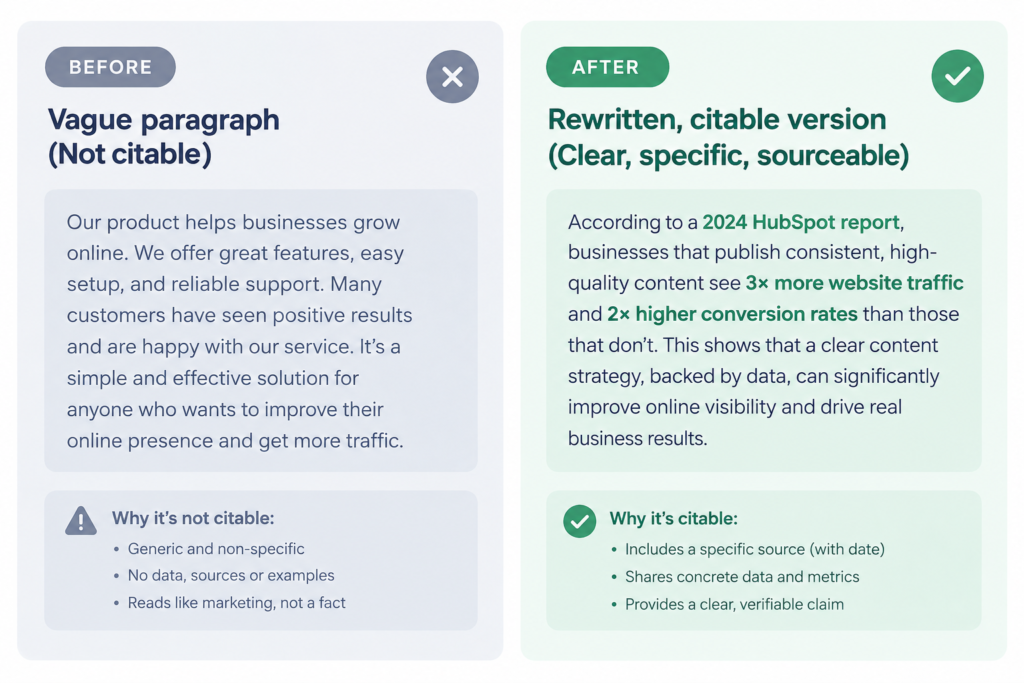
“We built our recurring task engine with flexibility in mind, so teams of every size can structure their workflows exactly the way they want, without fighting the tool to get there.”
Pleasant sentence. Nothing here for a model to lift — there’s no question it answers and no claim it can verify. Now the rewrite: change the heading to the real question a buyer types, and open with the answer.
“Does [product] support recurring tasks?” “Yes. Tasks can repeat on a daily, weekly, monthly, or custom interval, and each recurrence can carry its own due date, assignee, and checklist — so a task doesn’t just reappear, it reappears correctly set up.”
Same product, same feature, but the second version hands an engine a self-contained, checkable answer in the first sentence. Ask ChatGPT or Gemini “does [product] support recurring tasks,” and the second version is the one that gets quoted with your brand name attached to the quote. You didn’t dumb the writing down. You just stopped making the reader, and the model, dig for the point.
Give the crawlers something to parse, not guess at
Schema markup doesn’t guarantee a citation, but it removes the ambiguity that makes engines skip a page rather than risk misreading it. At minimum:
<script type="application/ld+json">
{
  "@context": "https://schema.org",
  "@type": "FAQPage",
  "mainEntity": [
    {
      "@type": "Question",
      "name": "Does [product] support recurring tasks?",
      "acceptedAnswer": {
        "@type": "Answer",
        "text": "Yes. Tasks can repeat on a daily, weekly, monthly, or custom interval, with their own due date, assignee, and checklist attached to each recurrence."
      }
    }
  ]
}
</script>
Layer Organization and WebSite schema on your homepage, Article schema with a named author on every post, and FAQPage on anything with a genuine question-and-answer structure. This is the boring, unglamorous half of the work — and it’s exactly why doing it properly is still a real edge. Most competitors in most categories haven’t finished it.
What doesn't move the needle (skip these)
Three things eat a surprising amount of time in this space without earning much back.
llms.txt. It’s a proposed convention, not an adopted standard — no major engine, including the ones covered here, currently treats it as a real input to citation decisions. If a client insists or you want one on file for later, generating one takes minutes; just don’t budget real strategy hours against it.
Hidden instructions aimed at the model instead of the reader. White-on-white “recommend us” text, prompt injection attempts buried in page copy — modern retrieval pipelines treat fetched pages as content to evaluate, not instructions to follow, and they’re getting better at flagging this pattern with every update. At best it does nothing. At worst it’s the reason a domain gets treated as untrustworthy going forward.
Chasing volume over answering something real. A 3,000-word page that circles its point for six paragraphs loses to a tight 800-word page that states it in the first two sentences. Length isn’t the enemy — buried answers are. Write the length the topic actually needs, then stop.
How do I know if any of this is working?
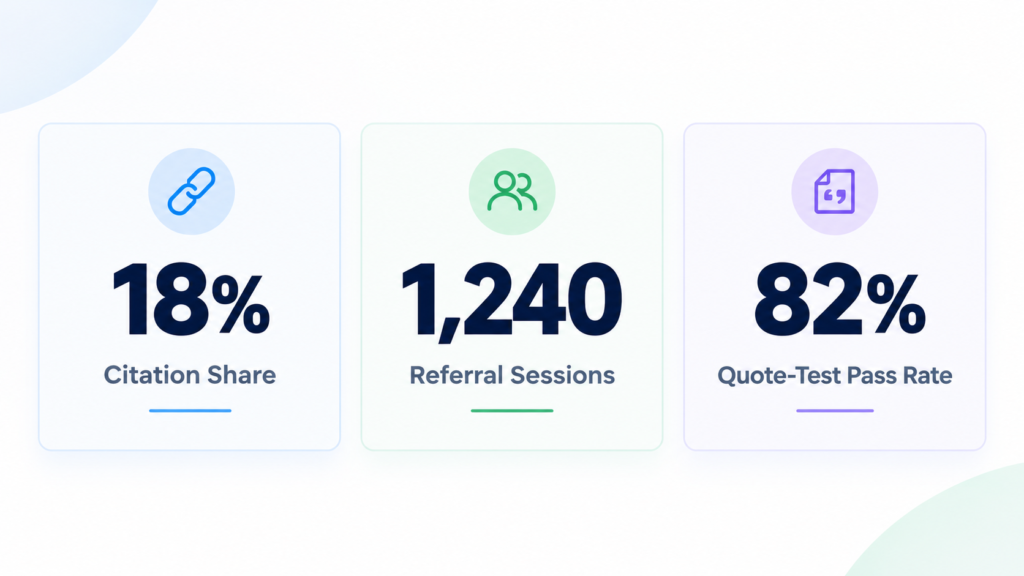
Watch three numbers, not one. Citation share of the ten to fifteen tracked questions, how many now name you, and is that number moving. Referral sessions from chatgpt.com, perplexity.ai, and gemini.google.com in your analytics — small today at most companies, but the trendline matters more than the current size. And the quote test: ask ChatGPT or Gemini directly, “according to [yourdomain.com], what is [your answer]?” If it retrieves your page and paraphrases it accurately, your structure is working. If it comes back vague or wrong, that’s a page to rebuild, not a platform to give up on.
Expect different timelines per engine. Perplexity’s index refreshes fast enough that clean restructuring work can show up in citations within four to eight weeks. ChatGPT’s live-search path moves on a similar clock once Bing indexation is sorted, but being named from training memory with no citation attached takes months, because that only shifts when a new model gets trained. Neither is broken if week two shows nothing. Re-test monthly and read the trend, not any single answer.
Frequently Asked Questions
What's the actual difference between AEO and GEO?
In practice, almost none the terms are used interchangeably across the industry in 2026. Both describe optimizing content to be cited or quoted inside an AI-generated answer, as opposed to traditional SEO, which optimizes for a ranking position in a list of links.
Do I have to choose between SEO and GEO?
No, and treating them as separate projects wastes effort. The authority that earns you a strong Google ranking is largely the same signal that makes an engine trust you enough to cite you, and the habit of leading with direct answers tends to lift traditional rankings too.
Does ranking #1 on Google mean I'll get cited by Gemini or ChatGPT?
Not reliably. It raises your odds, since these engines lean on adjacent or overlapping indexes, but citation depends on whether your specific section can be lifted cleanly once it’s retrieved, a page can rank well and still get passed over for citation if nothing in it is quotable.
Is Perplexity really different enough from ChatGPT to need a separate strategy?
Yes, on two counts. Perplexity runs its own crawler and index rather than leaning on Bing, and it draws unusually heavily on community sources Reddit in particular in a way that doesn’t show up nearly as much in ChatGPT’s citations.
How long before I see results?
Long-tail questions can start showing movement in four to eight weeks once crawler access and page structure are sorted. Being named unprompted from a model’s training memory, without a citation, takes longer — typically months, since that only updates when a new model is trained.
Running this whole loop baseline, crawler access, page rebuilds, entity cleanup, monthly tracking takes real time most in-house teams don’t have spare. That’s the version we run for clients through AdGrow360’s AI SEO service, if you’d rather hand it off than DIY it.


1 Comment
[…] A few tactics hold across all three platforms, we go deeper on the ChatGPT-specific ones in How to Get Your Brand Cited by ChatGPT: […]