

by: Anas Khan
-
August 18, 2026
-
Comments (2)
Google processes more than 8.5 billion searches a day. A rapidly growing share of them never end in a click at all the answer just appears, written by an AI, pulled from a website the searcher will never actually visit.
That’s the environment SEO operates in now, and it’s why the old textbook definition, “getting your website to rank on Google” — has quietly stopped being the whole story.
SEO, in one sentence: Search engine optimization (SEO) is the practice of shaping a website’s content, structure, and reputation so that search engines and increasingly, AI systems like ChatGPT, Gemini, and Google AI Overviews can understand it, trust it, and serve it to the people searching for exactly what it offers, without paying for the placement.
What SEO Actually Means Now
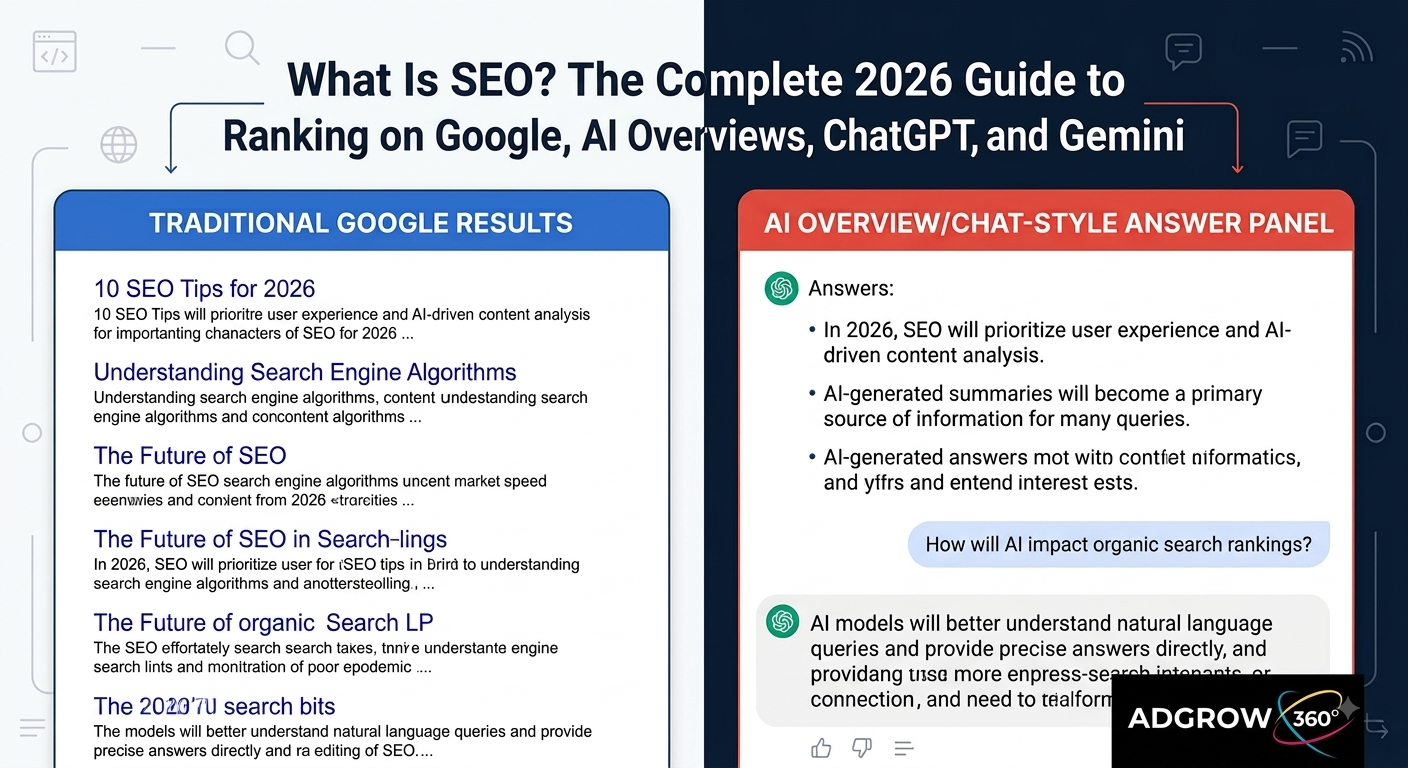
For twenty-odd years, “the machine” meant Google’s ranking algorithm, and the goal was a spot among ten blue links. That’s still most of the job — Google handles something like nine out of every ten searches globally, and organic listings alone still send roughly half of all traffic websites receive. Nothing else comes close.
But “the machine” now also means the retrieval systems sitting behind ChatGPT, Gemini, and Google’s own AI Overviews. These don’t return a ranked list at all. They return one synthesized answer, assembled from pieces of several sources at once, and your site is either part of that synthesis or it’s invisible to it.
The tactics for winning at both overlap more than most people expect. Get the fundamentals below right, and you’re largely covering both at the same time.
How Search Engines and AI Search — Actually Find Your Content
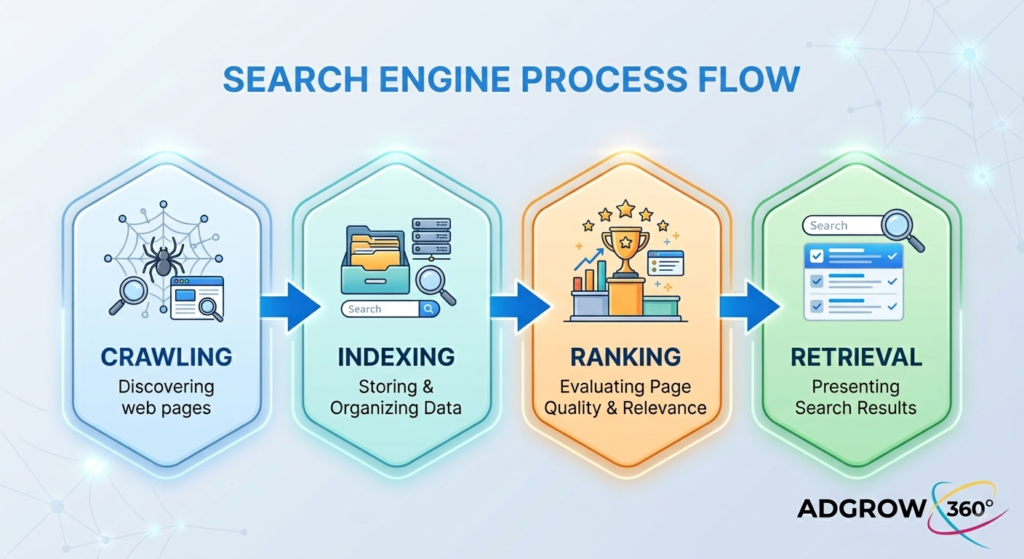
Search engines have always worked in three stages to decide what deserves to rank. In 2026, there’s an unofficial fourth stage worth understanding too.
Crawling comes first. Bots — Googlebot is the one that matters most follow links from page to page, reading what’s there. A page nobody links to, or one your robots.txt file quietly blocks, may never get found in the first place, and undiscovered content can’t rank no matter how good it is.
Indexing comes next, and it’s not automatic. Once a page is crawled, the engine decides whether it’s worth keeping in its index essentially a massive, searchable copy of the web. Thin pages, duplicates, and pages riddled with technical errors often get left out. Crawled doesn’t mean indexed, and indexed is the floor, not the ceiling.
Ranking is where the real competition happens. For every query, the engine compares every indexed page that could plausibly answer it and orders them by relevance, quality, and trust a calculation involving 200-plus signals that gets rerun for every single search.
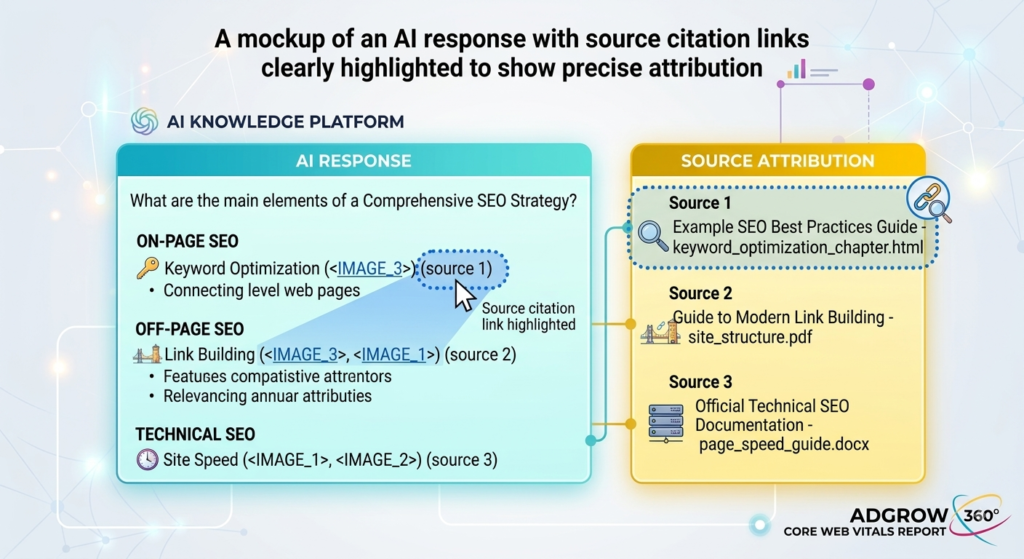
Retrieval is the step most “what is SEO” guides still skip. When someone asks ChatGPT, Gemini, or an AI Overview a question, the system isn’t rereading the internet in real time — it’s pulling pre-broken-down chunks (a paragraph, a definition, a single step) that match the question, then stitching an answer together from them. A long, meandering article can rank just fine in Google’s traditional index while being nearly useless here, simply because no single paragraph in it stands on its own as a complete thought. Structure isn’t a nice-to-have anymore. It’s the line between being retrievable and being invisible to an entire, fast-growing category of search.
The Three Pillars of SEO
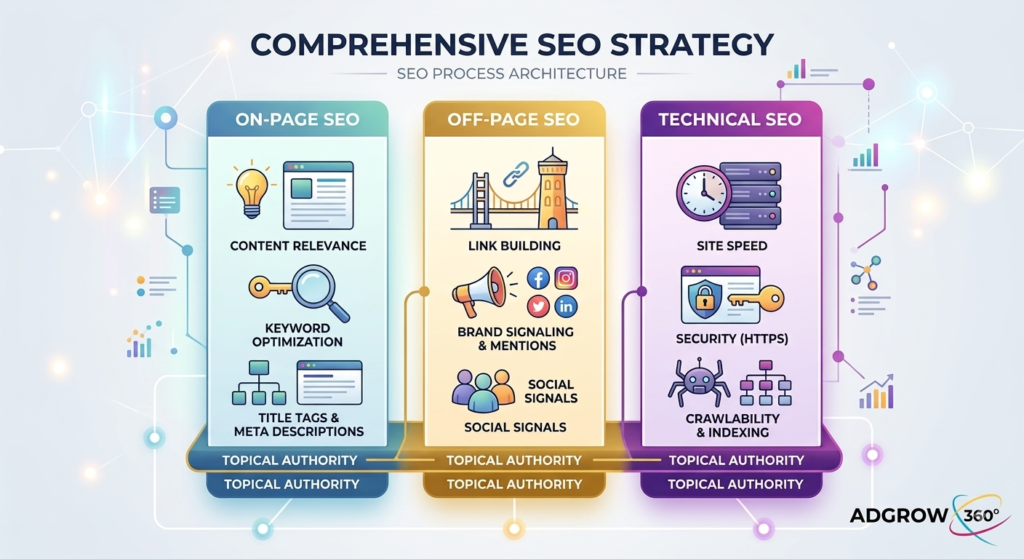
| Pillar | What It Handles | How Much Control You Have | Where the Work Happens |
|---|---|---|---|
| On-page SEO | Everything on the page itself | Full control | Titles, headers, keyword placement, internal links |
| Off-page SEO | Signals that happen elsewhere | Influenced, not owned | Backlinks, digital PR, brand mentions, reviews |
| Technical SEO | The infrastructure underneath | Full control | Site speed, crawlability, mobile UX, schema |
On-page SEO is the first impression, made simultaneously to the reader and to the algorithm reading over their shoulder. Title tags and meta descriptions decide whether someone clicks at all. Header structure tells both search engines and AI retrieval systems how the page is organized. Keywords worked in naturally, not stuffed, signal what the page is actually about — and a genuinely descriptive URL does more work than most people give it credit for.
Off-page SEO is reputation you can’t fully control but can absolutely earn. Backlinks remain the strongest signal here, and quality beats volume by a wide margin: Ahrefs has found that roughly 92% of pages sitting in the top 100 results carry at least one backlink, and the page in the #1 spot typically carries close to four times the backlinks of everything ranking below it in the top ten. A handful of links from genuinely respected sites in your space will outperform a stack of low-quality ones every time.
Technical SEO is the part nobody sees and everybody feels. You can publish the best content on the internet and still rank nowhere if the site underneath it is slow, broken, or unusable on mobile. A Shopify store with duplicate collection pages or an uncrawlable filter system runs into this constantly — the writing was never the problem.
None of these three carry much weight in isolation, though. Google and AI systems don’t evaluate a single page in a vacuum; they evaluate whether the whole site is a credible resource on the subject. In practice, that means building content in clusters: a pillar page on, say, “SEO services,” surrounded by supporting articles on keyword research, technical audits, and link building, each one linking back to the pillar. That clustering is what topical authority actually looks like the connective tissue between the three pillars rather than a fourth one sitting beside them.
Search Intent Decides Everything Else
Before any ranking factor matters, content has to match what the searcher actually wants. That’s search intent, and it comes in four flavors: informational (someone wants to learn something, like “what is SEO”), navigational (they’re hunting for a specific brand or site), commercial (comparing options before deciding), and transactional (ready to act, like “hire an SEO consultant”).
A page can be flawless on every technical dimension and still struggle if it answers the wrong kind of question. What’s genuinely new in 2026 is that intent no longer just affects ranking — it affects whether an AI Overview shows up at all. Informational, definition-style queries get answered directly by AI systems most consistently, which is exactly why a page like this one needs to nail the direct-answer format early. Commercial and transactional queries, where the searcher still needs to compare and click through, tend to hold onto traditional link-based results longer.
What Actually Moves Rankings in 2026
Google has confirmed it weighs more than 200 factors, and reportedly not even its own engineers could recite them all. A small handful does most of the real work:
- Content quality and E-E-A-T (Experience, Expertise, Authoritativeness, Trustworthiness). Google’s two confirmed broad core updates this year — March 27 to April 8, then May 21 to June 2 — both reinforced this as a durable signal rather than a passing trend: thin, generic pages lost ground while substantive, well-sourced content held.
- Search intent match — the filter everything else has to pass through first.
- Backlinks and referring domains — third-party endorsement, weighted heavily toward quality over volume.
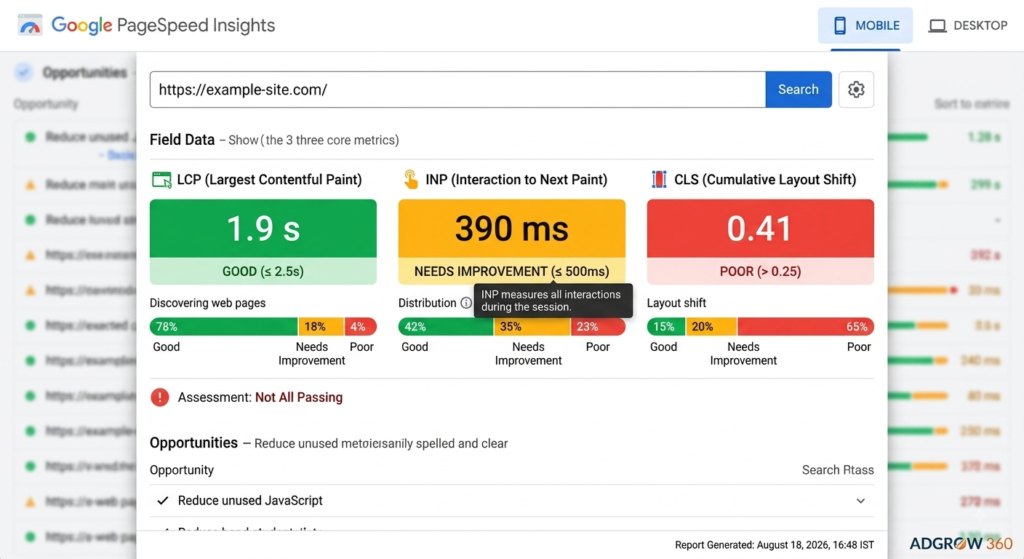
- Technical health and Core Web Vitals — loading speed, interactivity, and visual stability, all official ranking signals.
- Mobile-first experience — Google evaluates your mobile site by default, not desktop.
- User signals, namely click-through rate and dwell time. Instant Press’s 2026 data puts the average CTR for the #1 organic spot at around 27.6%, with the top three results together pulling in over half of all clicks — which is exactly why a genuinely compelling title tag is worth the extra ten minutes.
- Freshness — not a new post every week, but genuinely current information on the pages that matter most.
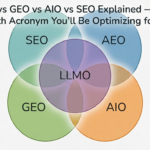
SEO, SEM, AEO, GEO, AIO: What Each Term Actually Means
This is the part most competing guides rush through, and it’s exactly where the useful nuance lives.
| Term | Optimizes For | Shows Up In | Core Tactic |
|---|---|---|---|
| SEO | Ranking in unpaid results | Google, Bing | Content + backlinks + technical health |
| SEM | SEO and paid search combined | Organic and paid results | Everything under SEO, plus PPC campaigns |
| AEO | Being extracted as the direct answer | Featured snippets, People Also Ask, voice search | Short, structured, question-matched answers |
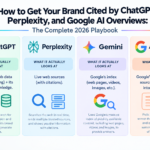
| GEO | Being cited inside an AI-written response | ChatGPT, Perplexity, Gemini, AI Overviews | Clear, self-contained, well-sourced passages |
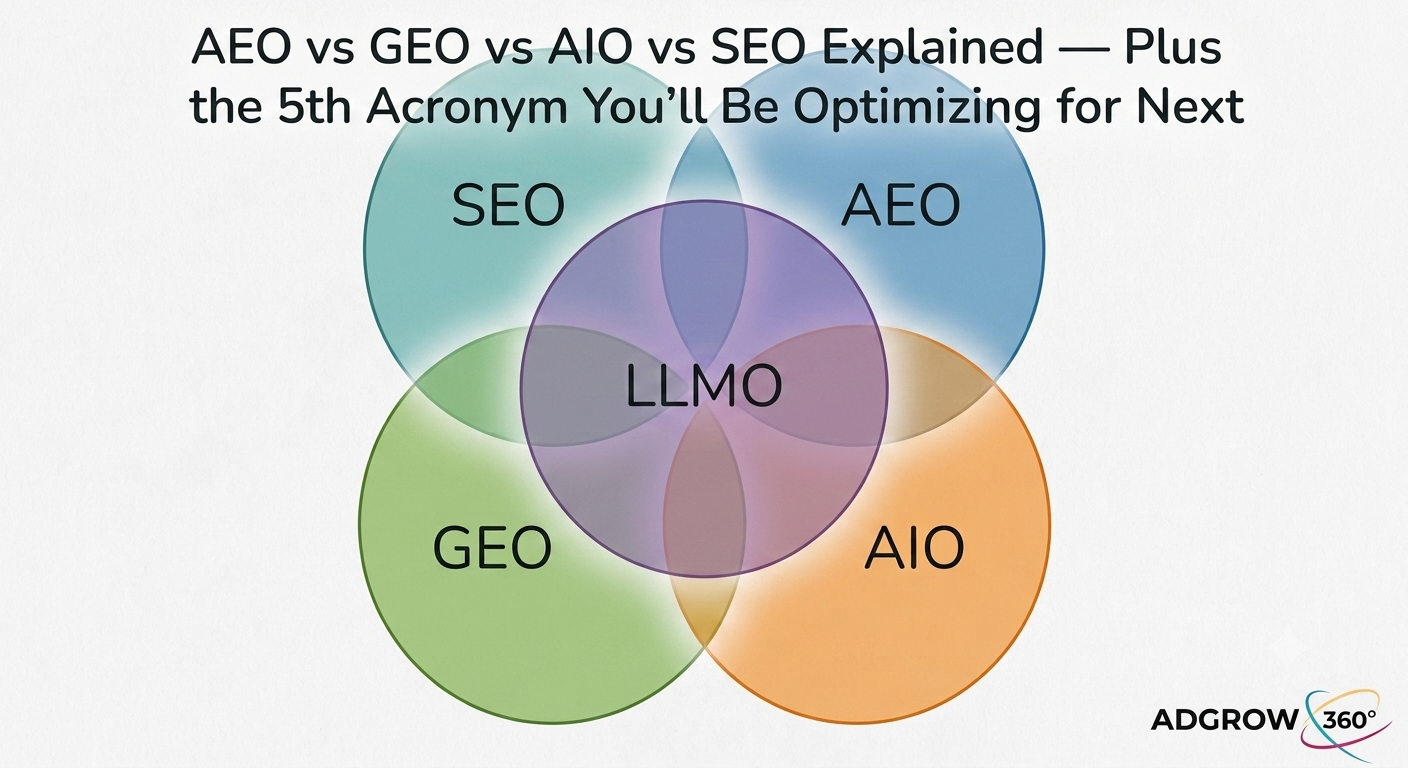
| AIO | Usually Google’s AI Overviews specifically | Google AI Overviews and AI Mode | Same signals as AEO/GEO, aimed at Google |
Worth being honest about: unlike SEO and SEM, which have settled meanings, the industry hasn’t converged on one definition for AIO, you’ll see it used both ways, sometimes in the same article. That’s not sloppiness on anyone’s part; it’s just where the terminology genuinely stands right now.
The practical takeaway matters more than the acronyms. These aren’t five competing strategies to pick between AEO and GEO build directly on top of solid SEO. One AIOSEO analysis found that close to half of the pages cited inside Google AI Overviews were already sitting in the top 10 organic results for that same query. A page that isn’t earning traditional rankings is unlikely to earn AI citations for the same term either. Build the SEO foundation, then layer AEO and GEO structure on top — don’t skip straight to whichever acronym is trending.
How to Actually Get Cited by ChatGPT, Gemini, and AI Overviews
Most competitors aren’t even watching this yet, a 2026 Goodfirms survey found only about 14% of marketers currently track their visibility inside AI-generated answers at all.
- Answer the question in the first 150–200 words. AI retrieval systems weight opening content heavily. Bury the answer under three paragraphs of throat-clearing and it may never get pulled.
- Write in self-contained passages. Since AI systems retrieve chunks rather than whole pages, every section should make sense as the only paragraph someone ever reads.
- Use real structure — question-phrased headers, short paragraphs, bullet lists, comparison tables. This isn’t just readability for humans; it’s how machines parse a page into extractable pieces.
- Add FAQPage schema to genuinely useful FAQ content. It’s one of the fastest, highest-leverage technical moves available right now, because it hands AI systems pre-formatted question-and-answer pairs instead of making them guess.
- Think in sub-questions, not just headline keywords. AI systems typically break a complex query into several smaller searches — sometimes called “query fan-out” — rather than matching the phrase literally. Content covering the surrounding angles of a topic gets pulled into more of those sub-searches.
- Build genuine third-party authority. Original data, case studies, and expert commentary that other sites reference are exactly what AI systems weight as authority — the same E-E-A-T fundamentals that already matter for traditional SEO.
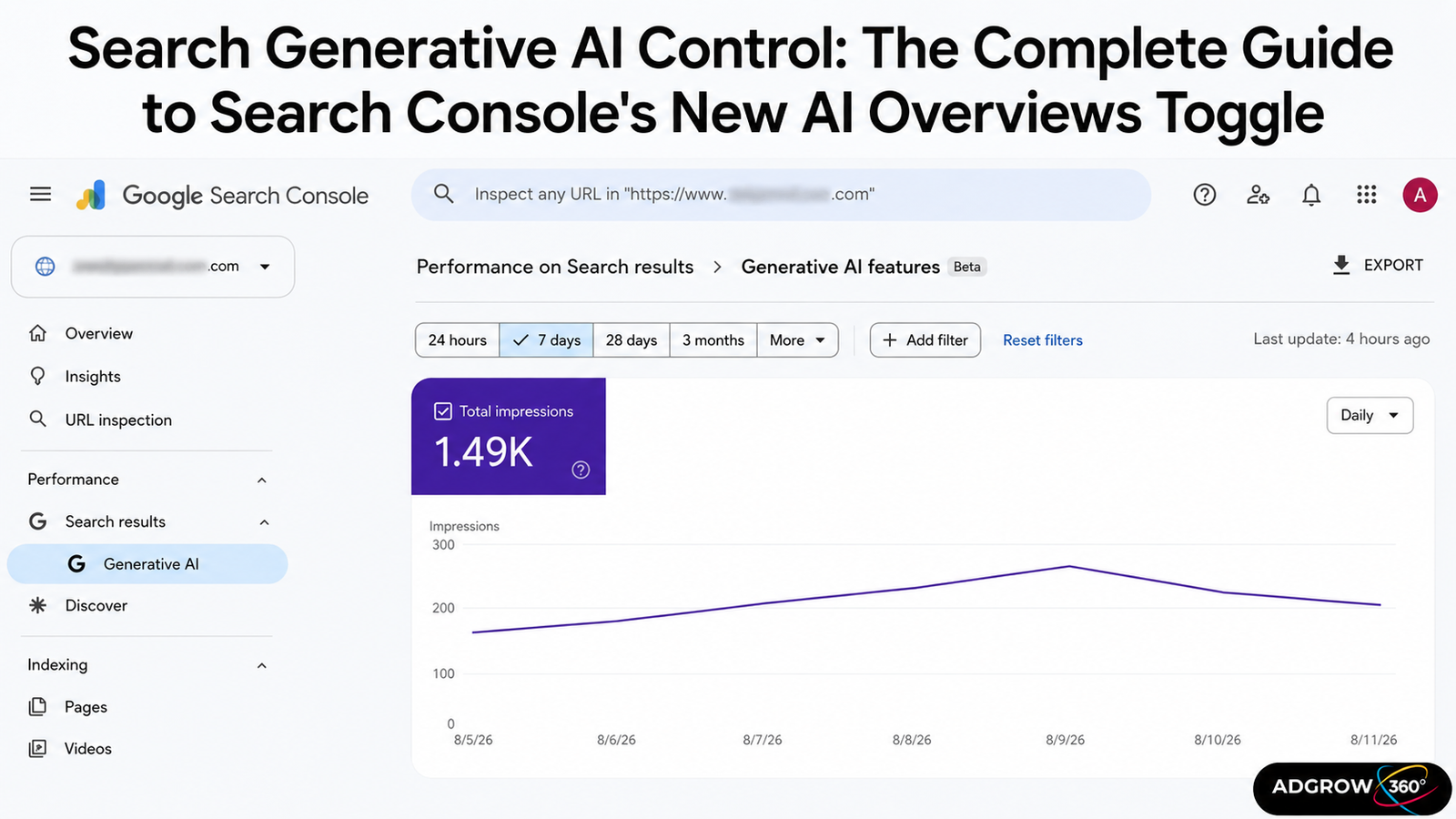
- Check your AI eligibility settings, not just your robots.txt. Google quietly split “do I rank” from “do I get cited in an AI answer” into two separate questions this year with its Search Generative AI Control setting in Search Console — a property can stay fully indexed and still be set to Exclude from AI Overviews, AI Mode, and Discover’s AI summaries without anyone noticing. Some platforms have also shifted default settings toward blocking AI crawlers like GPTBot and ClaudeBot, so it’s worth checking both settings directly rather than assuming.
- Keep your best pages current. A page with an outdated date attached is one an AI system is less inclined to trust as the current answer.
Mistakes That Quietly Cap Growth
- Chasing search volume over realistic fit. A keyword with 10,000 monthly searches is worthless if the top 10 are all sites with a decade of authority behind them. Check what’s already ranking before committing to write.
- Obsessing over content while the technical foundation is broken. A slow or unmobile-friendly site puts a ceiling on how well even great writing can perform.
- Publishing thin, purely AI-generated filler. AI tools make volume easy, which is exactly the problem — Ahrefs pegs AI-generated content at roughly 17% of what’s currently sitting in Google’s top 20 results, and search engines are actively working to filter the mediocre share out, not reward it.
- Treating SEO as a one-time project. Algorithms shift, competitors keep publishing, and pages that ranked well two years ago quietly decay without upkeep.
- Skipping internal links. A page nothing else on the site links to is harder for crawlers to find and harder for AI systems to place in context — which is the whole reason this article has links running through it instead of sitting as an island.
- Blocking AI crawlers by accident while trying to “protect” content, then wondering later why nothing shows up in AI-generated answers.
Where to Start: A Practical Action Plan
- Set up Google Search Console and Google Analytics — free, takes minutes, and you can’t fix what you’re not measuring.
- Confirm the technical basics: mobile-friendly, fast-loading, no major crawl errors flagged.
- Do focused keyword research — find 10 to 20 realistic terms the site can plausibly compete for right now, not the highest-volume terms in the industry.
- Clean up on-page fundamentals on the pages that matter most: titles, meta descriptions, headers, internal links.
- Write one genuinely excellent piece around the highest-priority keyword before writing ten mediocre ones around adjacent terms.
- Add FAQ Page and Article schema to the strongest content so both traditional search and AI systems can parse it cleanly.
- Start earning backlinks through outreach or genuinely useful original content, rather than waiting for them to show up on their own.
- Revisit the best-performing pages every few months instead of only ever publishing something new.
How Long Does SEO Take — and Is It Worth It?
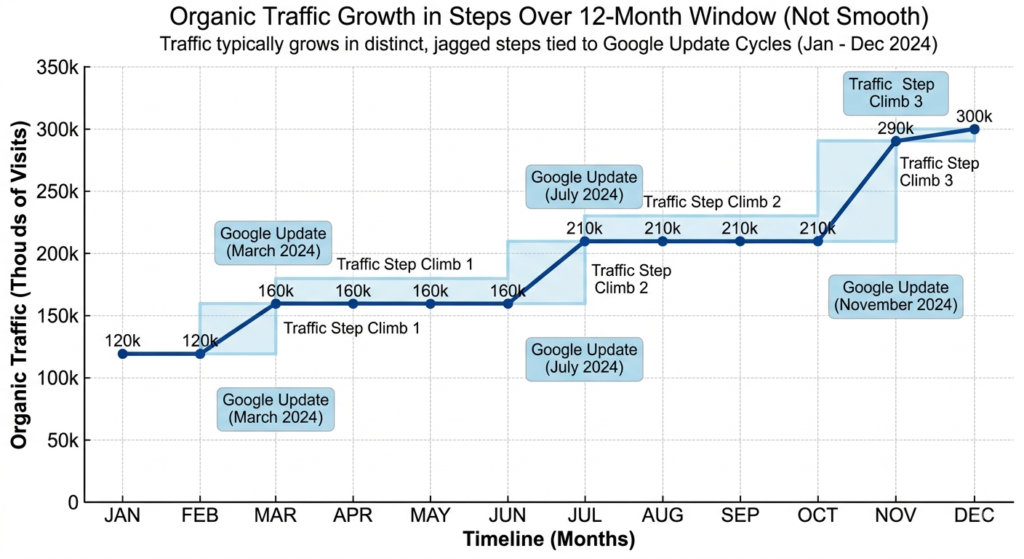
Most sites see measurable movement within 3 to 6 months, longer in competitive industries. That timeline roughly tracks how often Google runs broad core updates this year’s landed March 27–April 8 and May 21–June 2, which re-evaluate content across the web in waves rather than continuously. Expect progress in steps, not a smooth daily climb.
On return, the numbers hold up: when NP Digital studied 119 companies side by side, SEO delivered something like an 8x return — roughly double what the same businesses saw from PPC. Unlike paid ads, that return doesn’t stop the moment the budget does. A well-built page can keep earning traffic for years after the work is finished.
Key Takeaways
- SEO now means earning trust with two systems at once: the one that ranks pages, and the one that writes answers by pulling from them.
- Crawling, indexing, and ranking are still the backbone — retrieval is the fourth step now driving AI-generated answers.
- On-page, off-page, and technical SEO all depend on each other; topical authority is what ties them into one credible site.
- AEO and GEO extend SEO rather than replace it — strong traditional rankings meaningfully raise your odds of being cited by AI.
- Checking your Search Generative AI Control setting is now as basic a housekeeping step as checking robots.txt.
- Most competitors in most industries aren’t tracking their AI visibility yet, which is exactly why it’s worth starting now.
Frequently Asked Questions
What is SEO in the simplest possible terms?
SEO is the practice of shaping a website and its content so that search engines and increasingly AI systems understand what it offers, trust that it’s credible, and show it to the people looking for exactly that. Visibility gets earned through relevance and quality instead of bought with ad spend.
Is SEO still worth doing now that people ask ChatGPT and AI Overviews instead of searching?
Yes. Traditional organic search still sends far more traffic than AI chatbots and AI Overviews combined, even as that gap narrows. There’s a deeper reason too: most AI systems giving a direct answer are still pulling heavily from content that already ranks well organically, so stepping away from SEO doesn’t just cost search clicks, it makes a site harder for the AI layer to find and trust as well.
What's the actual difference between SEO and GEO?
SEO optimizes content to rank in a list of links. GEO optimizes the same content to be pulled into and cited within an AI-generated answer, where there’s no list, just one synthesized response drawing from several sources at once. In practice, GEO builds on SEO rather than replacing it the clear, well-structured content that ranks well is also the content AI systems tend to trust and quote.
How do I actually find out if ChatGPT, Gemini, or AI Overviews are citing my site?
Three methods work reasonably well: ask the AI tools directly with the questions customers would ask, check analytics for referral traffic from sources like chatgpt.com or gemini.google.com, and for Google specifically pull the new Search Generative AI performance report in Search Console, which now shows how often pages get cited across AI Overviews, AI Mode, and Discover.
Can a small or local business actually compete in SEO?
Often more easily than big brands, not less. Ranking #1 nationally for something broad like “running shoes” is nearly impossible without a large budget. Ranking #1 for “[running shoe store in a specific city]” is genuinely achievable with focused effort, because the competing pool is far smaller. Businesses that struggle usually aren’t the ones with small budgets they’re the ones targeting terms too broad for where they’re starting from, which is exactly what a tighter local SEO strategy is meant to fix.
Does publishing more content help, or does quality matter more than quantity?
Quality wins, and the gap is widening. AI writing tools have made publishing trivially easy, and with AI-generated content now estimated at roughly 17% of Google’s top 20 results, search engines are actively filtering a flood of mediocre AI content rather than rewarding volume. One genuinely useful, well-researched page consistently outperforms ten generic ones covering the same ground.
Do I need to hire an agency, or can I handle SEO myself?
The fundamentals technical setup, on-page optimization, basic keyword research — are genuinely learnable without one. Specialized help tends to earn its cost back in competitive niches, on larger sites with hundreds of pages, or with link building and digital PR, which lean on relationships built over years. Many businesses do best with a hybrid: handle the basics in-house, bring in expertise for the parts that scale.
What tools do I actually need to get started?
Two are free and non-negotiable: Google Search Console, which shows how Google sees the site and what it already ranks for, and Google Analytics, which shows what happens after someone arrives. A paid platform like Ahrefs or Semrush becomes worthwhile once real keyword research or competitor analysis is underway — but it’s worth running on the free tools long enough to know exactly what questions need answering before paying for one.
SEO in 2026 isn’t something to set up once and forget. It’s an ongoing practice of staying visible everywhere customers are searching now including inside the AI answers that never show a list of links at all. If you’d rather have a team build and manage that strategy, get in touch with AdGrow360 for a free SEO and AI-visibility audit.


2 Comments
[…] SEO (Search Engine Optimization) is the practice of improving a website’s visibility in traditional search engine results pages so it ranks higher for relevant queries, using tactics like keyword targeting, technical site health, backlink building, and on-page content structure. It’s the oldest discipline on this list by a wide margin, and despite regular predictions of its death, it still forms the technical and content foundation the other three quietly depend on. […]
[…] twenty years, SEO had one scoreboard: position on the page. That scoreboard still matters, but it’s no longer […]